
Local SEO helps your business appear during that decision. For roofing, HVAC, plumbing, solar, and remodeling companies, this visibility can translate directly into phone calls, estimate requests, and booked jobs. But appearing locally takes more than adding a city name to your website — Google needs enough evidence to understand what your business does, where it operates, and whether customers trust it.
That evidence comes from several connected sources, including your Google Business Profile, website, customer reviews, business listings, and local authority.
At Web Pinnacles, Local SEO is Stage 1 of the Booked-Job Pipeline™. Its job is to get your business found. The remaining stages turn that visibility into qualified enquiries, appointments, and revenue.
What Is Local SEO?
Local SEO, short for local search engine optimization, is the process of improving a business’s visibility in location-based Google searches.
For a home-service company, that means appearing when nearby customers search for a service you provide, such as:
- “Roofing contractor near me”
- “HVAC repair in San Antonio”
- “Emergency plumber Houston”
- “Solar installer near me”
- “Kitchen remodeling company Dallas”
These searches combine a service with local intent. Sometimes the customer includes a city or neighborhood. In other cases, Google uses the person’s current location to provide nearby results.
Local SEO helps Google connect three things:
- The service being searched for
- The searcher’s location
- A relevant and trustworthy local business
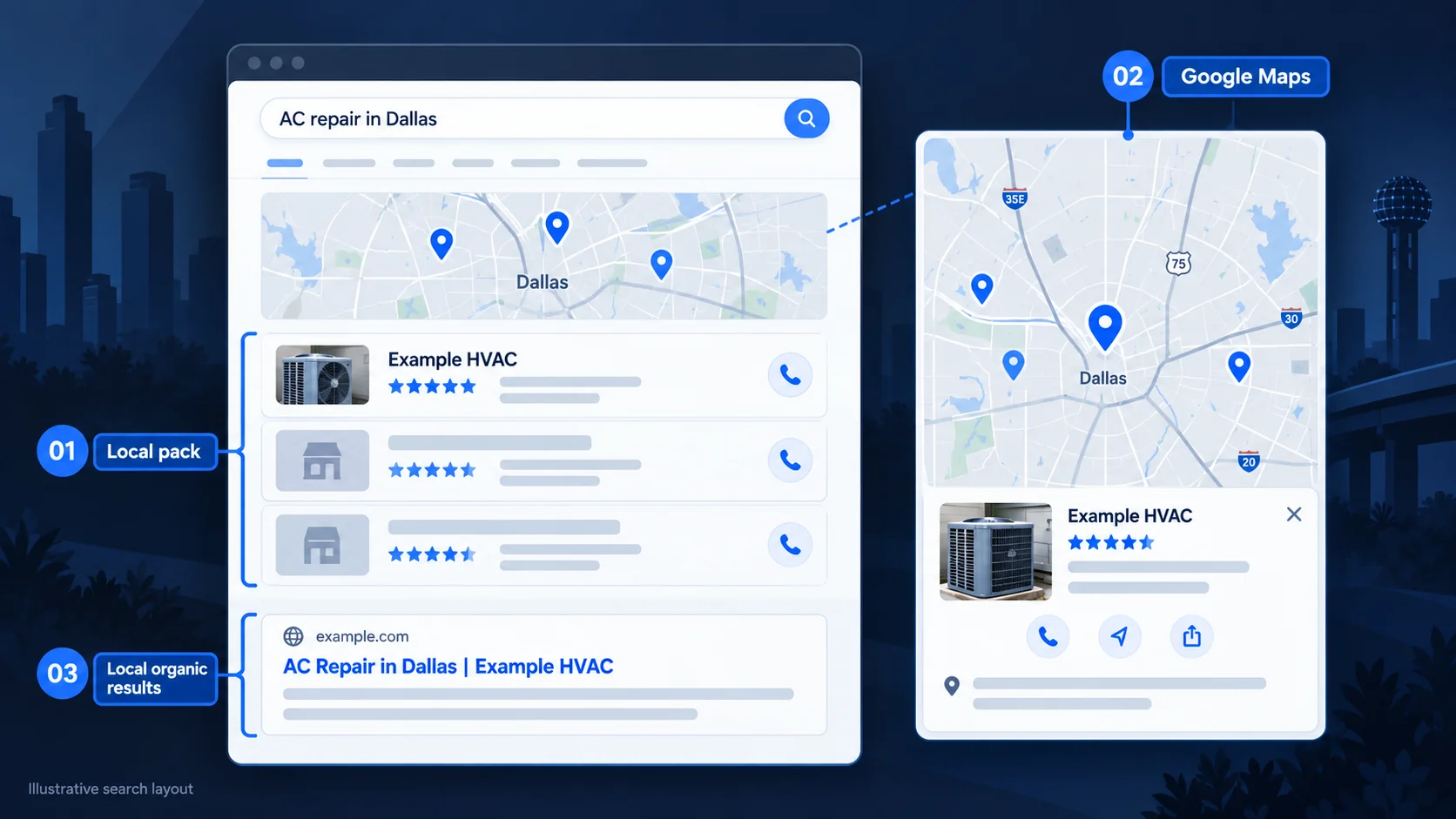
Its most visible search surface is the Google Maps 3-Pack — the group of three local business listings that often appears above traditional organic results. These listings can show the company’s rating, review count, opening hours, location details, website, and click-to-call button.
Local SEO can also improve visibility inside Google Maps and in the standard organic results below the map listings.
This makes it different from general SEO. Traditional SEO may help a national website rank for a broad informational query such as “how does an air conditioner work?” Local SEO focuses on commercially valuable searches tied to a particular market, such as “air conditioner repair in Austin.”
For a service-area business, the goal is not simply to earn more website traffic. It is to become visible in the right locations when people are actively searching for the services the business sells.
Local SEO Key Points
- It targets customers in specific cities, neighborhoods, or service areas.
- Google Business Profile optimization is one of its primary components.
- Reviews contribute to local prominence while also influencing customer trust.
- Accurate citations help Google verify the identity and location of the business.
- Service and location pages strengthen the website’s local relevance.
- Organic local visibility does not carry a per-click media charge, but achieving it requires ongoing work.
- Local SEO should ultimately be measured through qualified calls, appointments, booked jobs, and revenue — not rankings alone.
How Is Local SEO Different From Traditional SEO?
Local SEO focuses on reaching customers in the areas you serve. Traditional SEO can reach people across a country or around the world, depending on the topic and audience.
For example, “why is my AC blowing warm air?” could bring visitors to an HVAC website from anywhere. “AC repair in Dallas” is more likely to attract someone looking for a nearby technician.
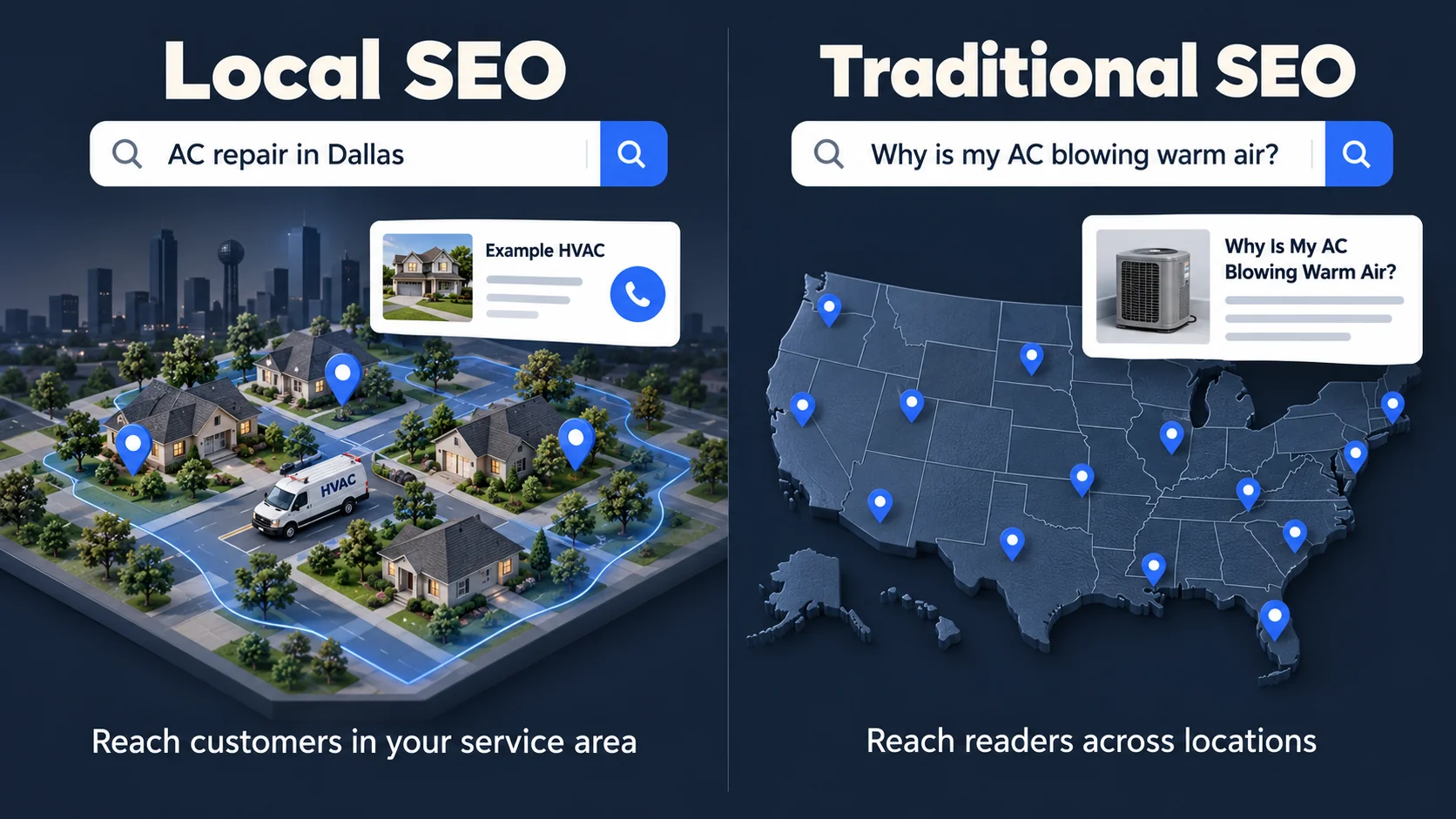
Both searches can matter to your business. The difference is how closely the visitor’s location and needs match the work you can take on.
| Area | Local SEO | Traditional SEO |
|---|---|---|
| Audience | Customers within your service area | A broader audience, depending on the topic |
| Example search | “Roof repair in Houston” | “What causes a roof leak?” |
| Search visibility | Maps listings and local organic results | Organic website results |
| Main assets | Google Business Profile, service pages, and location pages | Service pages, articles, and other website content |
| Business goal | Generate relevant local calls and quote requests | Attract search traffic that supports awareness, enquiries, or sales |
These approaches overlap. A useful roof-leak guide can help a homeowner understand the problem, then direct them to your roof repair service. Your service page can explain where you work, show completed projects, and make requesting an estimate easy.
For a home-service business, the priority is connecting that content to the areas you actually serve. A thousand visitors outside your market may produce fewer opportunities than a handful of local homeowners who need your help.
Where Do Local Search Results Appear?
Your business can appear in three main places: the local pack in Google Search, Google Maps, and the organic website listings. Each gives homeowners a different way to find and contact you.
The Local Pack in Google Search
The local pack is the group of business listings displayed alongside a map for many local searches. You might see it when searching for “plumber near me” or “roof repair in Houston.”
Listings typically show a business name, rating, opening hours, and options to call or visit the website. These details help a homeowner compare nearby businesses before making contact.
Your Google Business Profile supplies much of this information. A customer may call directly from the listing without ever reaching your website, so website traffic alone will not capture every enquiry.
Google Maps
Customers can also search directly in Google Maps or open the map results to explore more providers.
Here, they can read reviews, browse photos, check business details, and decide which company to contact. The results can change with the searcher’s location and the area they are viewing.
For a contractor, this means local visibility can differ from one neighborhood to another. Checking your position from your own office gives you only one view of how customers may find you.
Local Organic Website Listings
Local organic results are the unpaid website links outside the map listings. These may lead to a service page, a location page, or a useful article.
For example, a homeowner searching “AC installation in Dallas” might find your dedicated installation page. That page can explain the systems you install, the areas you cover, and how to request an estimate.
Your profile and website serve connected roles: the profile helps people assess your business quickly, while your website gives them more detail before they enquire.
How Does Local SEO Work for Service-Area Businesses?
If your team travels to customers’ homes, you operate a service-area business. Roofers, plumbers, and HVAC contractors often fit this model. You can have a Google Business Profile without a public storefront. If customers do not visit your business address, Google says to hide that address and display your service area instead.
For local searches, Google weighs three main factors: relevance, distance, and prominence. Together, they help determine which businesses appear for a particular customer, per Google’s local ranking guidance.
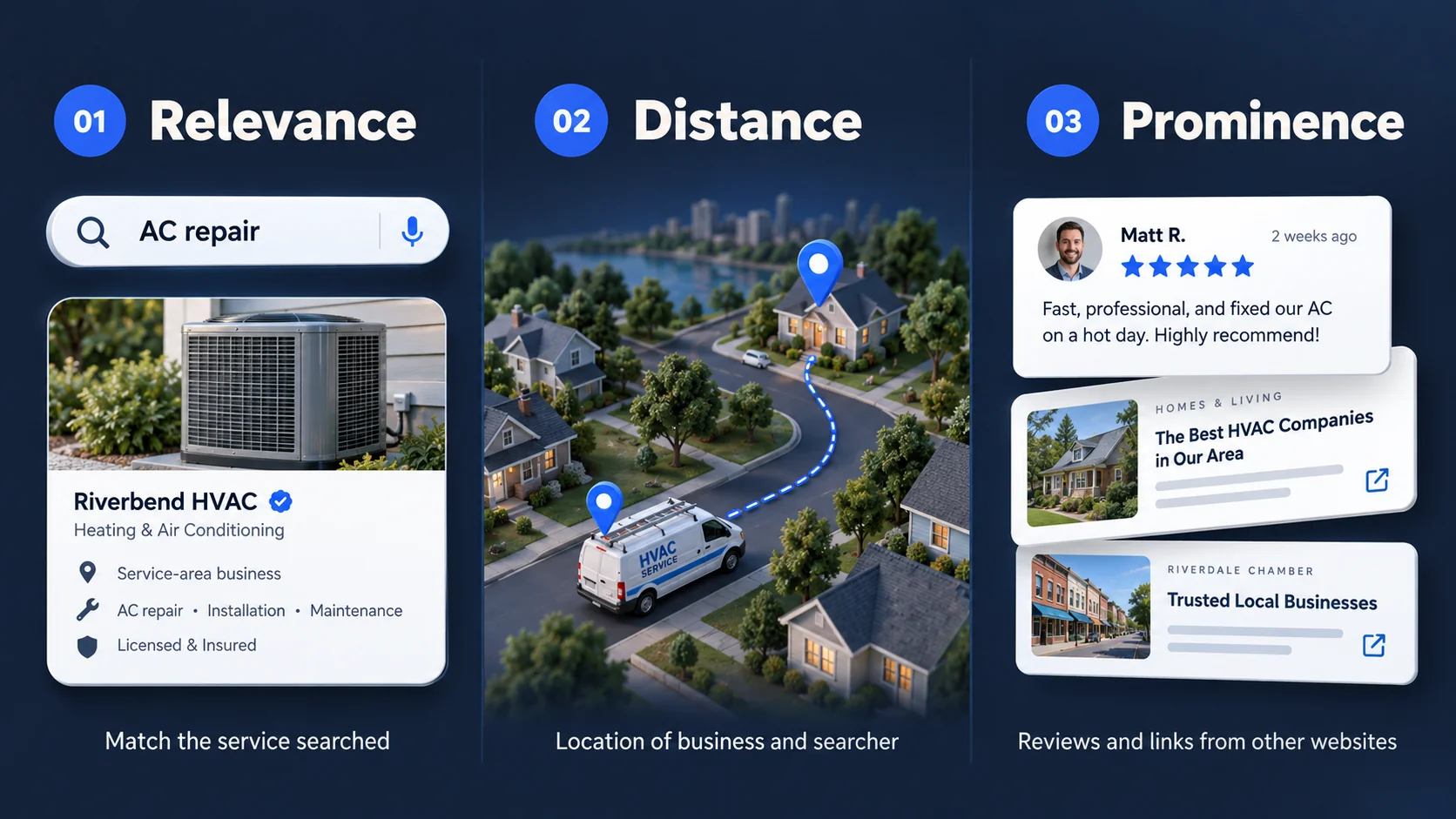
Relevance: Do You Offer What the Customer Needs?
Relevance describes how closely your business matches the search. Accurate categories and detailed business information help Google understand what you offer.
For example, an HVAC company should clearly distinguish AC repair from installation and maintenance. A homeowner with a broken system needs to know whether you handle that specific problem.
Distance: How Close Is Your Business?
Distance considers how far your business is from the person searching. This helps explain why local rankings can vary across neighborhoods.
For planning purposes, treat the area you serve and the area where you rank as different things. Being willing to drive across a city does not mean you will be equally visible throughout it.
Prominence: How Well Known Is Your Business?
Prominence reflects how established your business appears. Google identifies links from other websites, review volume, and positive ratings as contributing signals, per its local ranking guidance.
Build that reputation through completed work, honest customer feedback, and genuine industry relationships. Those efforts also give homeowners more evidence when choosing whom to call.
An effective local SEO strategy strengthens the factors you can influence while accounting for geography. Start with the services and locations that matter most to your business, then assess visibility across that market.
What Are the Core Components of Local SEO?
Local SEO combines profile management, customer reviews, accurate listings, and a useful website. Each component helps customers find your business, understand what you offer, or decide whether to contact you.
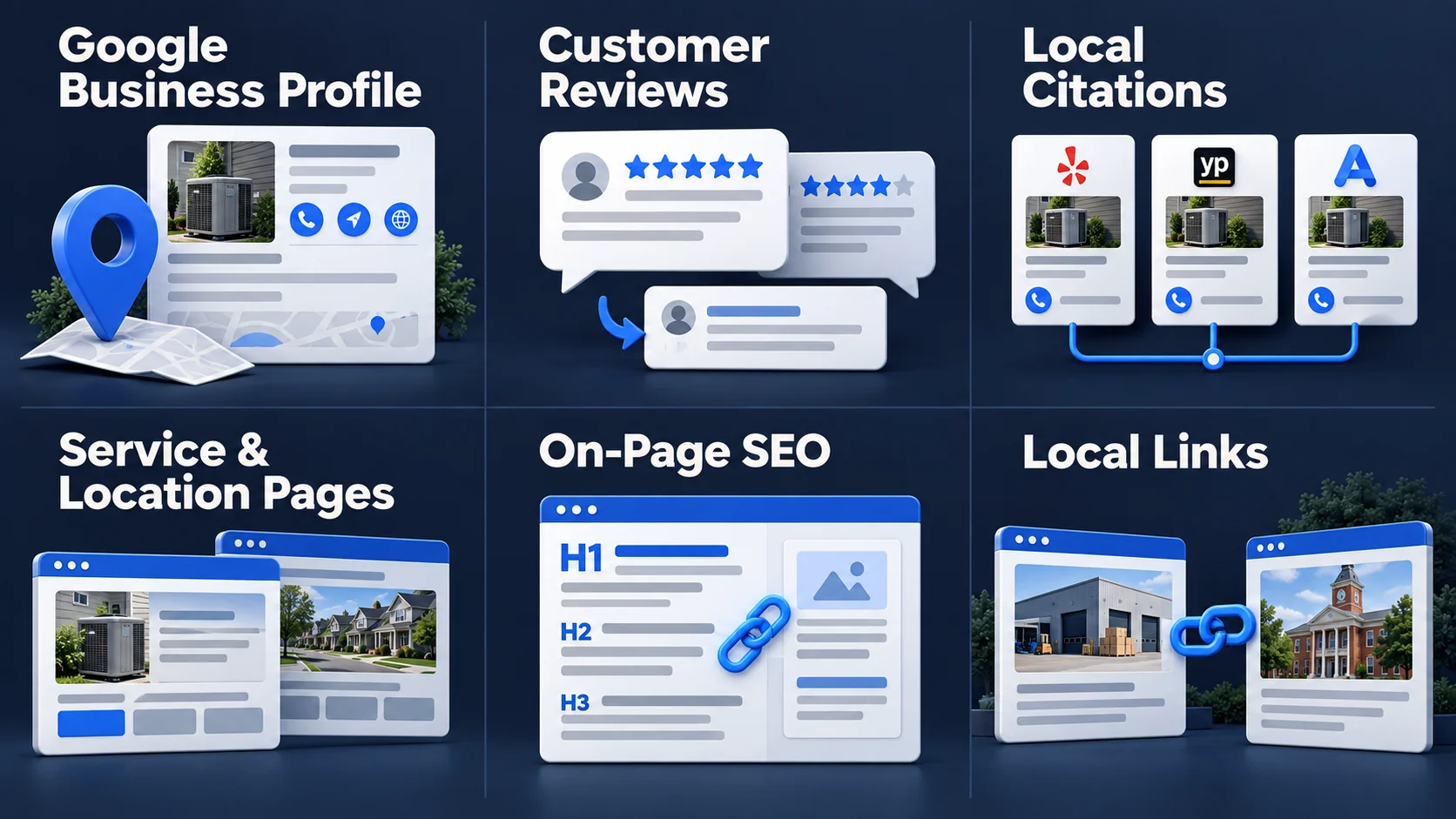
Google Business Profile Optimization
Your Google Business Profile is a key asset for appearing in the local pack and Maps. Google says complete, accurate information helps it match your business to relevant searches, per its profile guidance.
Start with your business category, services, opening hours, service area, and phone number. Add genuine photos of your team and completed work so homeowners can see who they are hiring.
Keep these details current. If you stop offering a service or change your hours, update the profile promptly. Customers should find the same information when they call or visit your website.
Customer Reviews and Responses
Reviews help homeowners assess your work before they contact you. They also contribute to visibility: Google confirms that more reviews and positive ratings can help local ranking, per its ranking guidance.
Make requesting honest feedback part of your job-completion process. Share a direct review link and respond thoughtfully to customer comments. Never offer discounts or rewards in exchange for reviews — Google prohibits these incentives.
Recent, detailed feedback also gives prospective customers a clearer picture of your service today. A review describing a repair, communication, and cleanup is more informative than a rating alone.
Local Citations and Business Listings
Local citations are online mentions of your business details, commonly your name, address, and phone number. They can appear in business directories, trade association profiles, and local directories.
Audit important listings for outdated contact details, duplicate profiles, and incorrect website links. Prioritize platforms that are relevant to your trade or market.
A directory count is not a useful goal by itself. An accurate business listing on a platform customers use has a clearer purpose than dozens of neglected profiles. For service-area businesses, respect address-privacy requirements when choosing and completing listings.
Service Pages and Location Pages
Your website should explain both the work you do and where you do it.
Give major services their own useful pages. For example, roof repair and roof replacement deserve different explanations because homeowners have different questions about each.
Create location pages where you can provide meaningful local content, such as completed projects, area-specific service details, and customer feedback. Simply replacing a city name across otherwise identical pages gives visitors little reason to trust that you know their area.
Each page should answer three practical questions: Can you handle my problem? Do you serve my location? How do I request help?
On-Page SEO and Internal Links
On-page SEO makes those pages easier to understand and navigate. Use clear titles, descriptive headings, and natural service-and-location wording.
Choose a local keyword that matches the page’s purpose, then answer the customer’s questions fully. Avoid repeating it in every paragraph.
Connect related pages with useful internal links. A roof-leak article can link to roof repair, while a project example can link to the service used. Make the next step easy to find through a visible call button or estimate form.
Local Links and Industry Relationships
Google identifies links from other websites as one signal of prominence, per its prominence guidance.
Look for opportunities grounded in your actual business relationships: supplier profiles, trade associations, community projects, and local coverage of work you have completed.
At Web Pinnacles, these components form the visibility work in Stage 1 of the Booked-Job Pipeline™. The next task is making sure the enquiries they generate reach your team and receive a timely response.
How to Get Started With Local SEO: Seven Practical Steps
Start by finding the gaps that could prevent a customer from discovering or contacting your business. Then work through these steps in order.
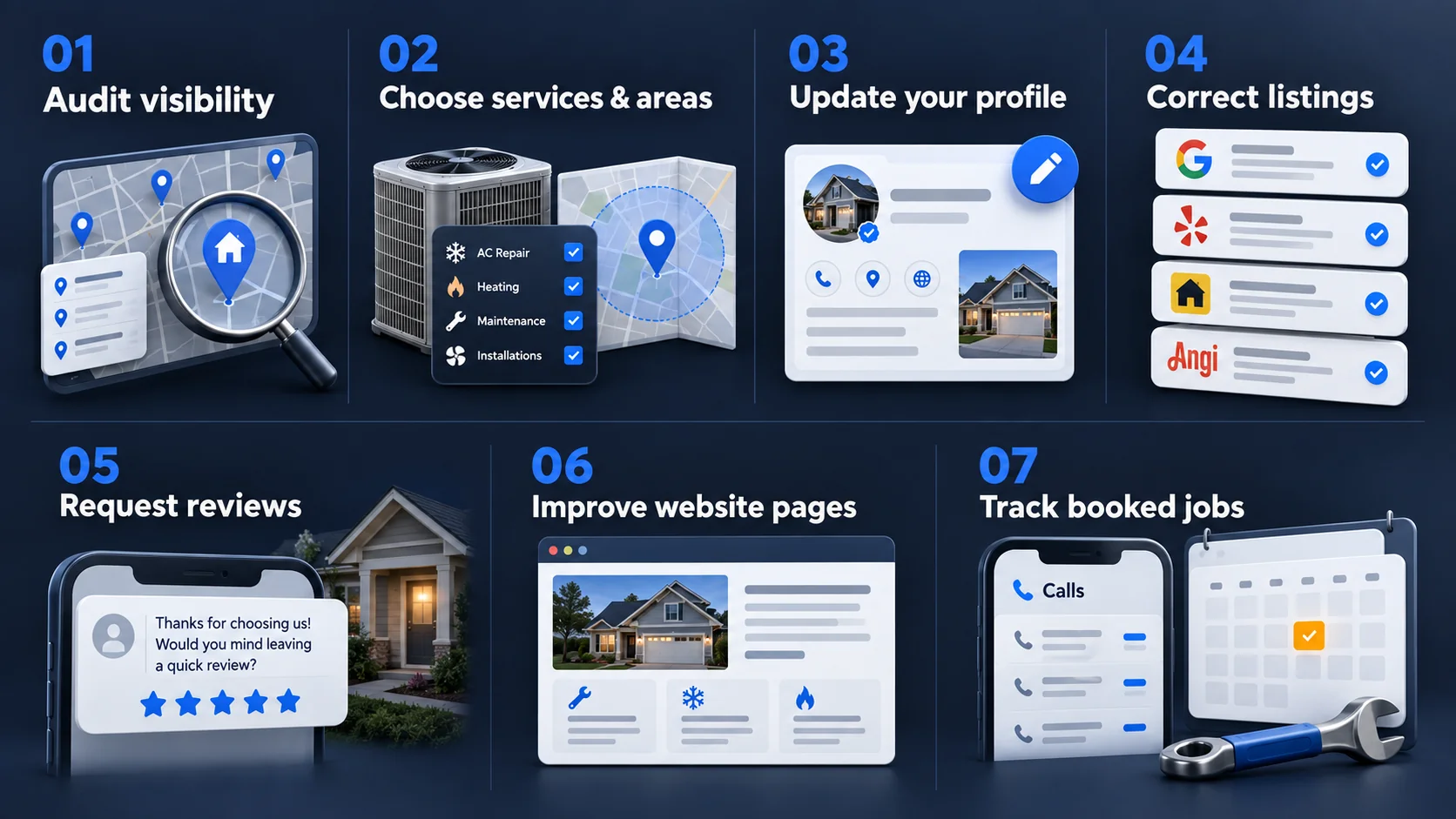
1. Check Your Current Local Visibility
Record where your business appears for its main services across the areas you serve. Use a local SEO tool with map-grid tracking to compare visibility from different search locations.
Review your profile, website, reviews, and major listings. Note missing information, outdated details, and pages that need improvement. Save this starting point so you can measure progress later.
2. Choose Your Priority Services and Locations
Focus first on work you want more of in places you can serve profitably.
For example, a roofer might prioritize roof repair in two nearby cities before targeting every service across an entire county. Consider demand, job value, travel time, and your team’s capacity when choosing targets.
Match each priority to the language customers use in local searches, such as “roof leak repair” or “AC installation.”
3. Update Your Google Business Profile
Check your category, services, opening hours, contact details, and service area. Add clear photos of your team, vehicles, and completed projects.
Test the website link and phone number yourself. A homeowner should be able to move from finding your profile to contacting your business without hitting an error.
4. Correct Your Important Business Listings
Find the directories and industry platforms where your business already appears. Fix old phone numbers, broken links, and inaccurate business details before adding more listings.
Keep a record of the profiles you manage and who has access. This makes future updates easier if your contact information changes.
5. Set Up a Consistent Review Request Process
Choose a point after each completed job to request honest feedback. Send customers a direct review link with a short, polite message.
Make this a routine for all customers, rather than asking only those you expect to leave positive reviews. Assign someone to monitor responses and address concerns professionally.
6. Improve the Pages Customers Will Visit
Start with the service pages connected to your priority searches. Explain what you do, where you work, and what happens after someone requests an estimate.
Add genuine project photos, useful answers, and relevant internal links. Check the experience on a phone: can visitors read the page, tap to call, and complete the form easily?
7. Track Enquiries Through to Booked Jobs
Monitor visibility alongside actual business outcomes. Record where enquiries came from, whether they matched your services, and what happened next.
| What to track | What it helps you understand |
|---|---|
| Maps visibility across target locations | Where customers may find your profile |
| Organic website enquiries | Which pages bring people into contact |
| Qualified calls and form submissions | Whether you are attracting suitable work |
| Appointments and estimates | How enquiries progress |
| Booked jobs and revenue | What those opportunities produce |
Keep click-to-call activity separate from answered, qualified calls. Likewise, a form submission is only the start of a potential job. This is how Web Pinnacles connects Local SEO to the Booked-Job Pipeline™: tracking the customer’s path from discovery through to a booked job.
What Is Barnacle SEO, and How Do Citations Support It?
Barnacle SEO means building a presence on established websites that your potential customers already find through search. For a home-service business, this could include a directory, trade association, or contractor marketplace.
Imagine a homeowner searching for roofers in their city. They open a directory’s contractor list, find your profile, and contact you. That is an example of reaching a customer through another website’s visibility.
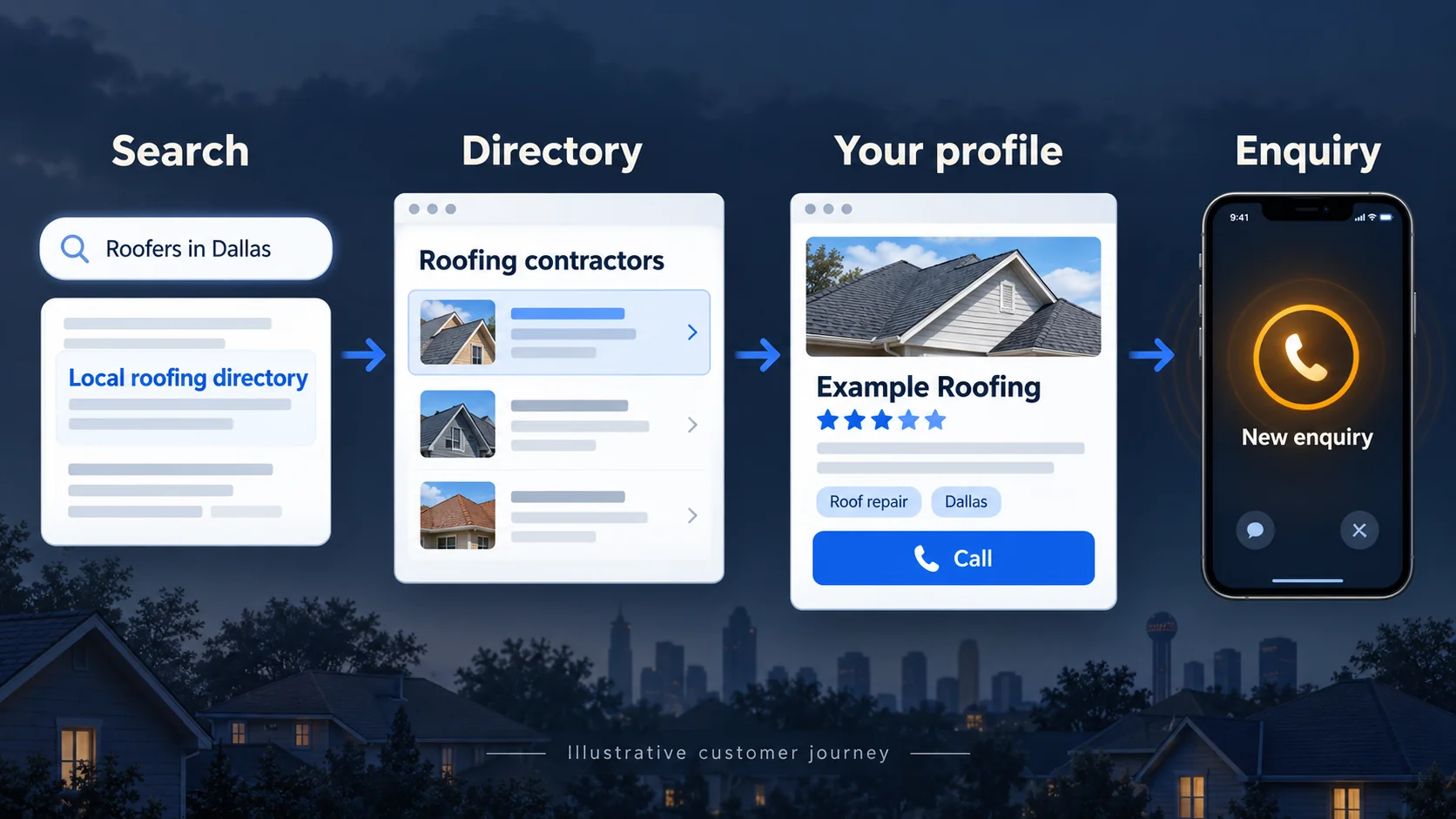
Citations Create the Starting Point
An accurate directory profile gives people a way to discover your business. Barnacle SEO takes that further by making the profile useful enough to help them choose you.
Where the platform allows it, include:
- The services you provide and areas you cover
- Genuine project photos
- Current contact details and a website link
- Customer reviews collected within the platform’s rules
Focus on platforms that appear for your target searches or attract your customers directly. A neglected listing on an unrelated directory offers little practical value.
Build Another Route to Your Business
Treat these profiles as additional places customers can find you. Keep developing your own website and Google Business Profile alongside them, since third-party platforms control their layouts, policies, and fees.
Track the enquiries each platform produces. The useful question is whether that presence brings suitable customers into your booking process.
Local SEO vs Google Ads: Which Does Your Business Need?
Local SEO builds unpaid visibility in Maps and organic search. Google Ads lets you compete for paid placements when people search for services you offer. Search ads can appear above or below organic results and in other eligible placements, per Google’s Search Network guidance.
Both can reach homeowners who need help. The main differences are how quickly you can gain visibility and what you pay to maintain it.
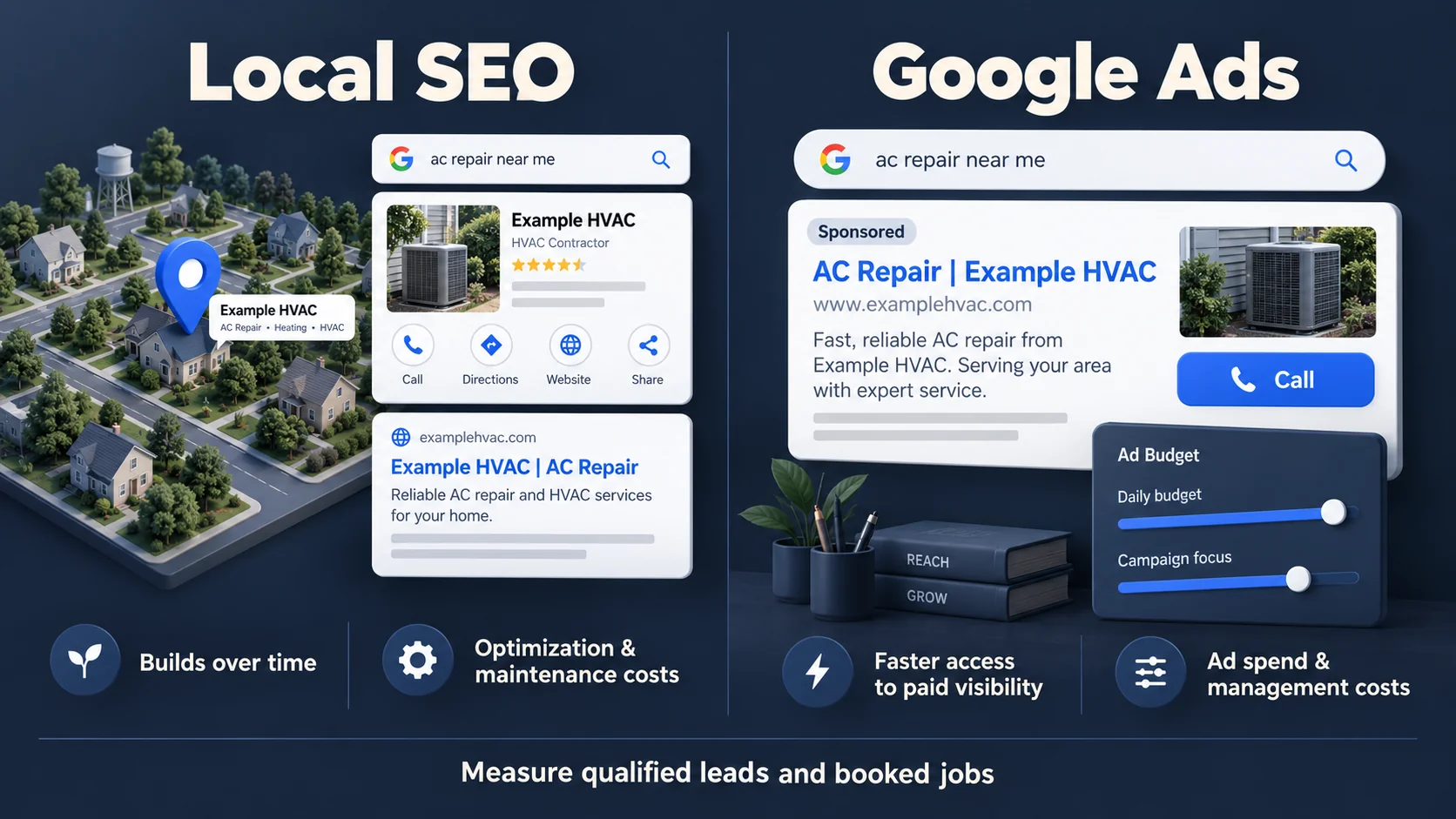
| Factor | Local SEO | Google Search Ads |
|---|---|---|
| Cost | Time or fees for optimization, content, and ongoing maintenance | Advertising spend, typically charged per click, plus any management fees |
| Speed | Improvements generally build over time | Can gain visibility once the campaign is approved and eligible to serve |
| Placement | Unpaid Maps and organic listings | Paid placements identified as ads |
| Control | Rankings depend on search algorithms, location, and competition | Targeting, budgets, bids, and schedules influence delivery |
| Useful role | Develop a lasting source of local enquiries | Target immediate demand or specific services |
When Local SEO Makes Sense
Local SEO suits a business investing in its service area over the long term. Useful pages, a well-maintained profile, and genuine customer reviews can continue helping people find and assess your company.
There is no media charge for each organic click. However, the work still costs time or money, and visibility requires ongoing attention.
When Google Ads Can Help
Paid search can support a more immediate need for enquiries. An HVAC company, for example, might promote AC repair during a busy season or target installation work when its team has capacity.
Faster visibility does not guarantee profitable jobs. The campaign still needs suitable targeting, a persuasive landing page, and someone ready to answer enquiries.
How the Two Channels Work Together
A home-service business can use ads to capture demand while its local presence develops. As results become clearer, it can adjust spending around the services and locations producing worthwhile jobs.
Paying for ads does not buy better organic local rankings. Google explicitly states that businesses cannot pay for an improved local ranking, per its local ranking guidance.
Whichever channel brings the enquiry, the next steps matter: answer promptly, qualify the work, and follow up. Compare performance through qualified leads and cost per booked job, including each channel’s full costs.
How Long Does Local SEO Take?
Plan for several months of consistent work. Fixing inaccurate contact details can help customers immediately, but stronger visibility and regular enquiries take longer to develop.
A working planning window is three to five months to assess meaningful movement, followed by five to six months or longer to assess lead consistency. These are estimates, not guaranteed milestones. Some businesses improve sooner; others need considerably longer.
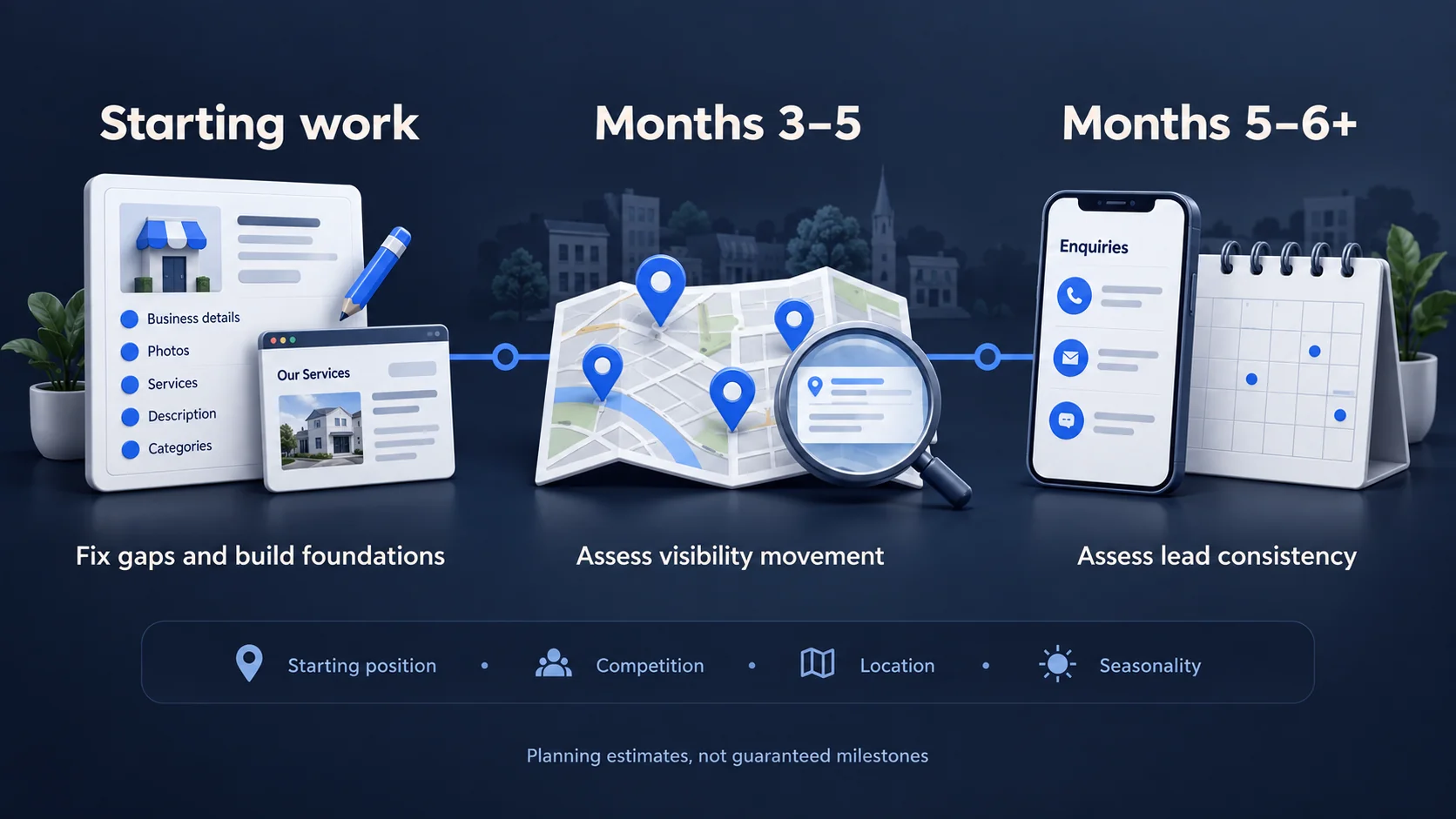
What Affects the Timeline?
Your starting position matters. An established contractor with genuine reviews and useful service pages has different needs from a business launching its first website.
The main variables include:
- Profile condition: Missing details, duplicates, or unresolved verification issues can delay progress.
- Competition: Markets with established contractors may require more sustained work.
- Website quality: Weak service pages or technical problems can limit organic visibility.
- Reputation: Building a genuine review history and industry relationships takes time.
- Location: Your business’s proximity to searchers affects where you can compete.
- Demand and seasonality: Enquiries can rise or fall even when visibility improves.
What Should You Look for Along the Way?
Early progress may include corrected listings, stronger service pages, and improved visibility for priority searches. Later, look for an increase in suitable enquiries across several reporting periods.
Compare the same services and search locations over time. Separate seasonal changes from improvements in performance, and check whether additional enquiries become estimates and booked jobs.
If visibility improves but calls do not, review the offer and contact experience. If calls increase but bookings remain flat, examine response times, lead quality, and follow-up. Local SEO results make more sense when you track the whole customer journey.
How Much Does Local SEO Cost?
Local SEO costs depend on the work needed, the competition in your market, and the number of locations you operate. You may pay for a one-time project, ongoing monthly support, or handle the work yourself.
Google does not charge for organic clicks. Your investment covers the research, improvements, and maintenance needed to compete for that visibility.
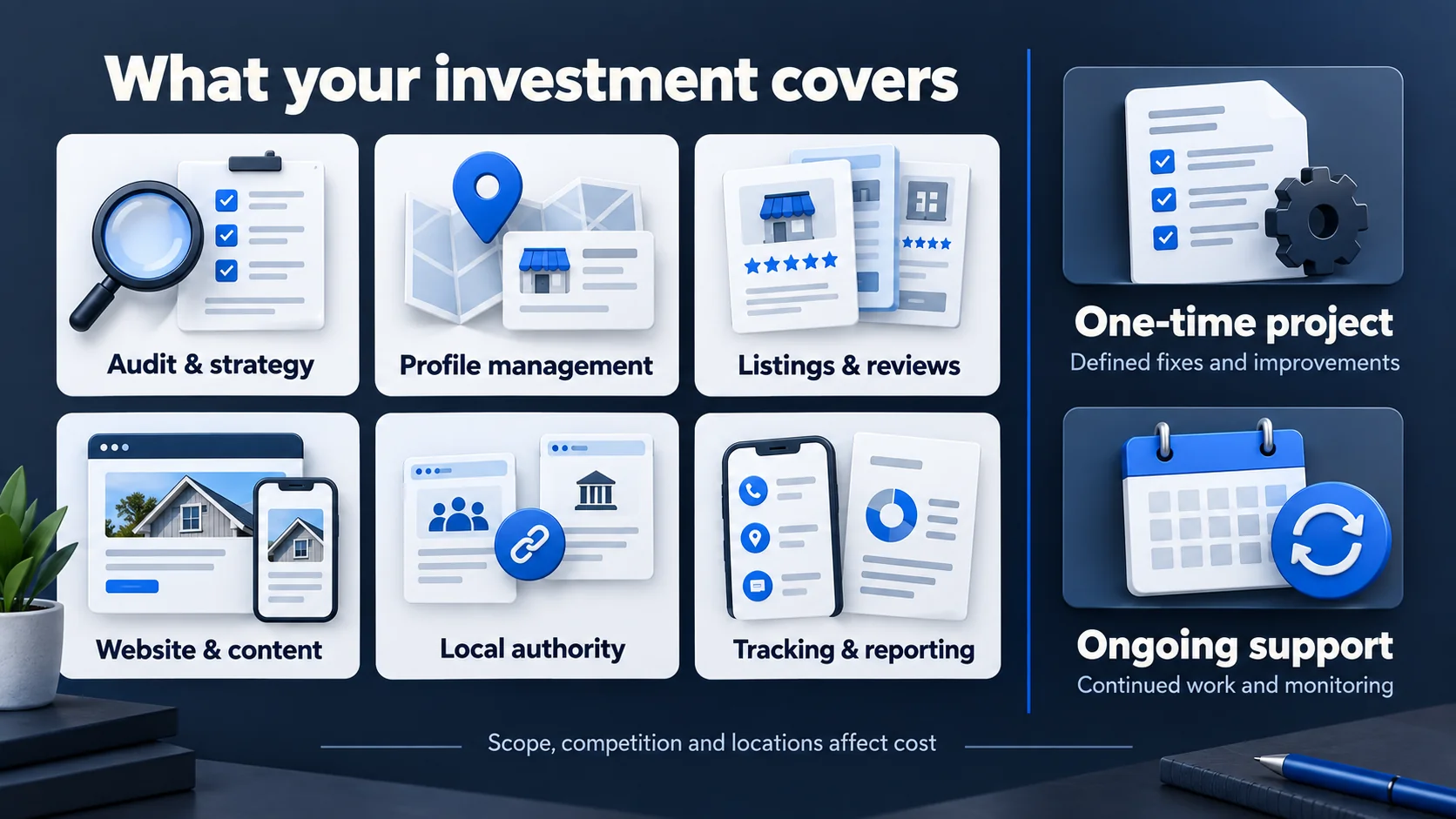
What Are You Paying For?
A proposal should explain the work included and how progress will be measured. Ask which tasks are included, how often they happen, and whether content creation or website changes cost extra. A low monthly fee can be misleading if essential work sits outside the package.
One-Time Work or Monthly Support?
A one-time project can suit a defined problem, such as correcting listings or improving a group of service pages. Monthly support suits ongoing work across content, reputation, competition, and performance.
Doing it yourself reduces agency fees, but still requires staff time and possibly paid tools. Choose an approach your team can maintain consistently.
Judge Cost Against Booked Work
Compare the investment with the gross profit from jobs attributed to local search, rather than revenue alone.
For example, suppose a campaign costs $1,000 per month and an additional completed job contributes $500 in gross profit before marketing costs. You would need two additional jobs to cover that monthly investment.
This is an illustrative calculation, not a service price or expected result. Allow for the time needed to build visibility, and track performance across several months. A useful proposal should make the scope, costs, and measurement clear enough for you to assess that trade-off.
What Results Should a Home-Service Business Expect?
Local SEO success means attracting suitable customers from the areas you serve and turning those enquiries into profitable work. Rankings help explain progress, but they do not tell the whole story.
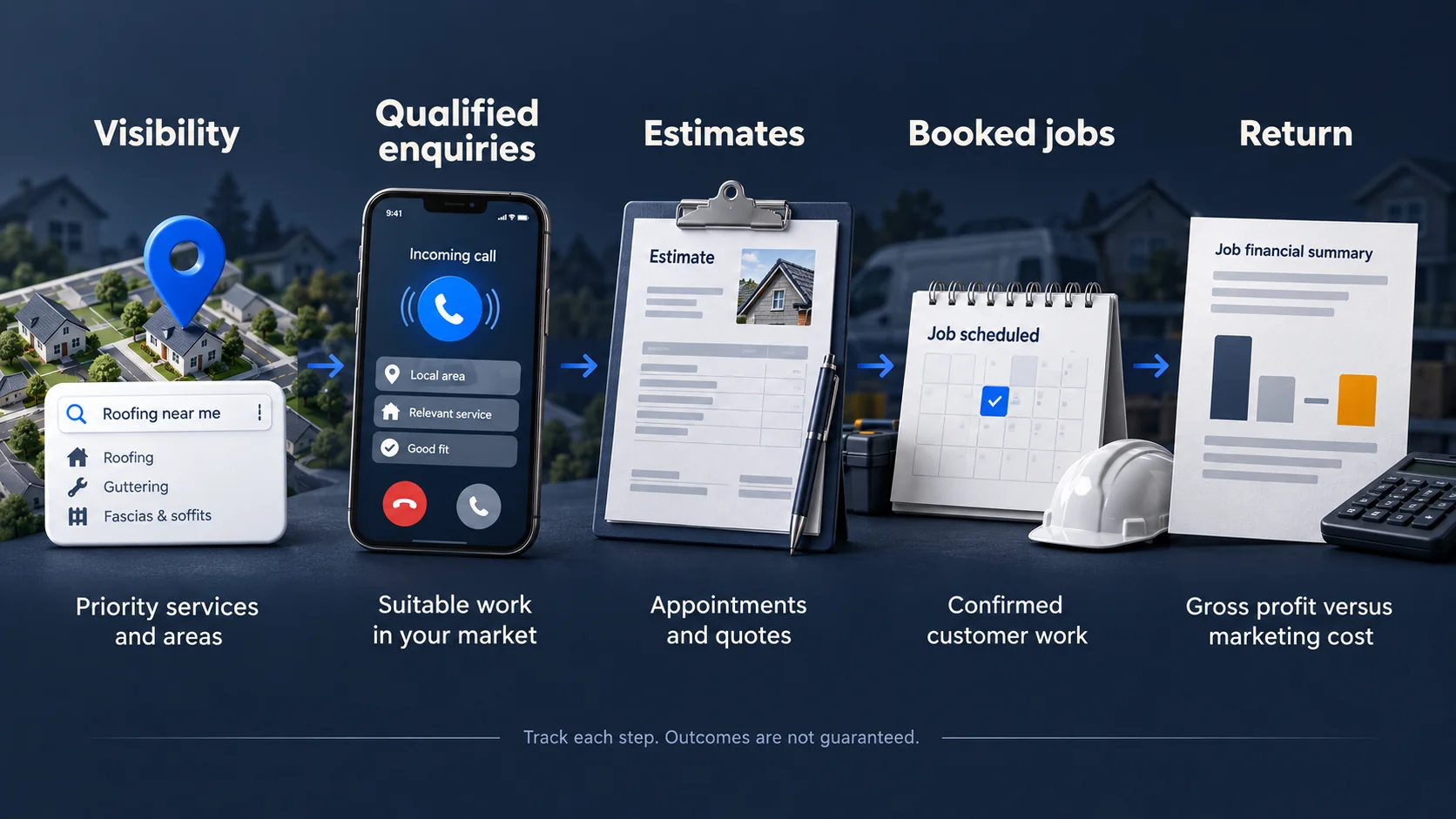
Better Visibility for Your Priority Services
Look for your business appearing more consistently across the locations and services you are targeting. Improvements might include stronger Maps visibility, more relevant website impressions, and more visits to key service pages.
Check which searches produce that activity. Visibility for “emergency roof repair” has a different business value from traffic to a general roofing advice article.
More Qualified Calls and Estimate Requests
A useful enquiry comes from someone within your service area who needs work you provide. Track that distinction when assessing local SEO results.
For example, ten calls that include supplier enquiries, wrong numbers, and out-of-area requests are not ten potential customers. Record the service requested, location, and outcome so you can judge lead quality.
A Clearer Connection Between Marketing and Revenue
Compare results over time using consistent tracking. Separate new customers from repeat customers, and account for seasonality when reviewing changes.
If enquiries rise but bookings do not, investigate missed calls, response times, pricing, and follow-up. If booked work increases, check whether it is the type of work you want more of.
When reviewing an agency’s case studies, look for a clear starting point, time period, work completed, and documented outcome. If a campaign combined Local SEO with paid ads, the results should explain that mix rather than attribute every job to organic search.
Within the Booked-Job Pipeline™, visibility is the first measurable step. The business benefit comes when that visibility produces enquiries your team can turn into completed, profitable jobs.
Where Local SEO Fits in the Booked-Job Pipeline™
Local SEO helps homeowners find your business. What happens after that determines whether the opportunity becomes paid work. The Booked-Job Pipeline™ connects that first search with the steps needed to turn an enquiry into a booked job.
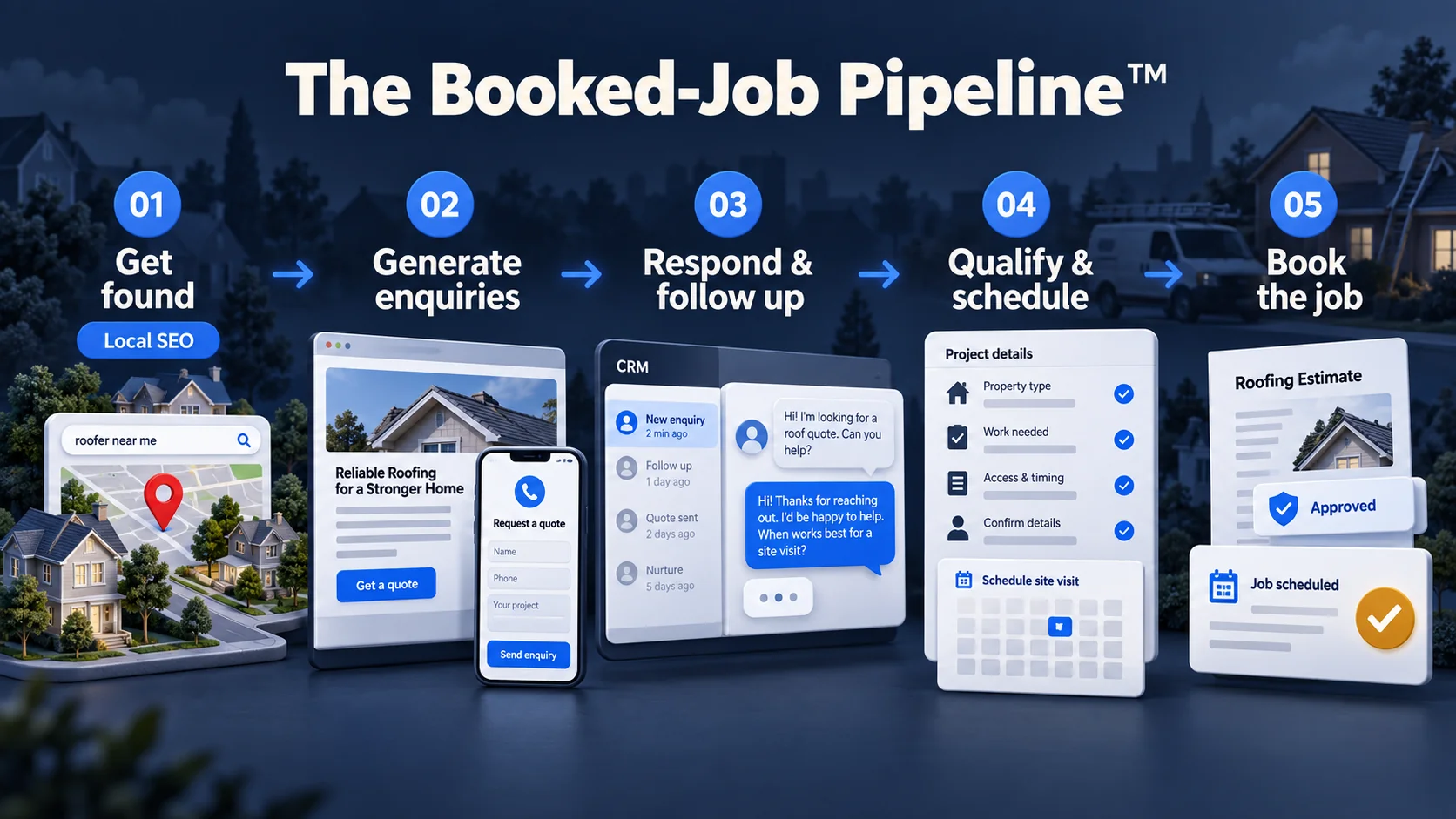
Stage 1: Get Found
Your profile and website appear when people search for services in your market. Local SEO supports this discovery through accurate business details, useful pages, reviews, and local authority.
The aim is to reach homeowners whose needs and locations match the work you provide.
Stage 2: Turn Attention Into an Enquiry
Once someone finds you, they need a reason to make contact. Clear service information, genuine project photos, customer feedback, and an easy way to request an estimate help them decide.
Make the next step obvious, whether they arrive through Maps or a website page.
Stage 3: Respond and Follow Up
An enquiry needs a timely response. Route calls and forms to someone responsible for handling them, and use your CRM to record what happens next.
An automatic acknowledgement can confirm that a request arrived. Your team still needs to answer questions, understand the problem, and arrange the next step.
Stage 4: Qualify and Schedule
Confirm the service needed, property location, urgency, and whether the job suits your team. Then arrange the appropriate appointment, inspection, or estimate.
Record these details so customers do not have to explain everything again when another team member takes over.
Stage 5: Turn Estimates Into Booked Jobs
Provide a clear scope, explain the price, and follow up on unanswered estimates. Once the customer agrees, confirm the schedule and expectations.
Track the outcome, including why suitable prospects did not book. That feedback can reveal problems with the offer, availability, or sales process.
For example, a homeowner might find your roof repair listing, call about a leak, schedule an inspection, and approve the estimate. Local SEO started that journey; the response and booking process helped complete it.
That connection shapes our Local SEO service: visibility is measured alongside the opportunities it creates and the work your team wins.
Common Local SEO Mistakes to Avoid
Small errors can make your business harder to find or contact. Others create unnecessary work without improving the customer experience. Watch for these common problems.
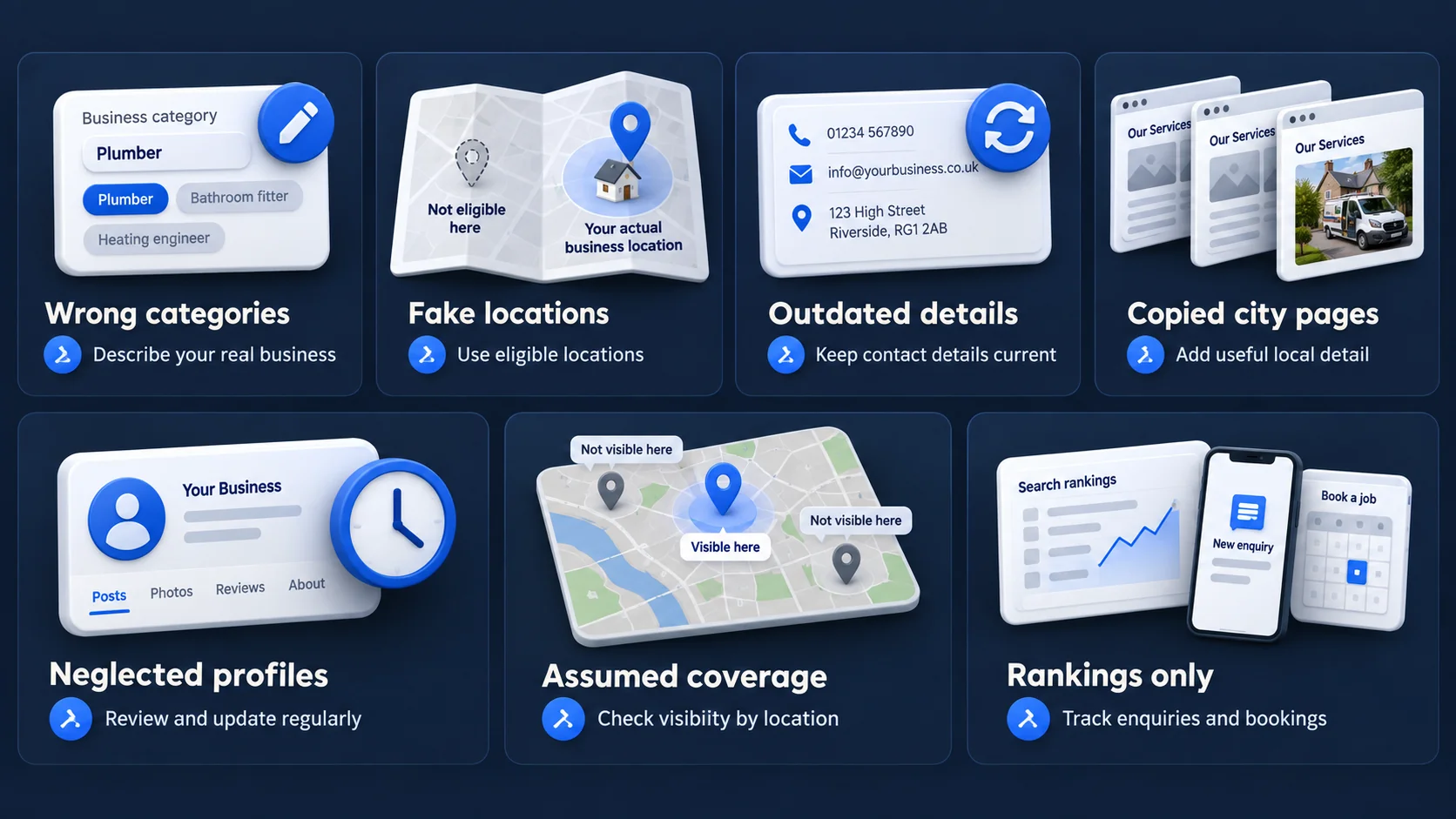
Choosing Inaccurate Categories or Adding Keywords to Your Name
Your profile should represent your real business. Choose categories that describe what you do, and use the business name customers recognize.
Adding phrases such as “best emergency plumber Dallas” to a name that does not include them can violate Google’s rules. Put service and location details in the appropriate fields, per Google’s business representation guidelines.
Using a Fake Address to Target Another City
A rented mailing address where your business does not operate is not an eligible location for a profile. For a service-area business operating from home, follow Google’s guidance on hiding the address.
Create additional profiles only for genuinely eligible locations, per Google’s location guidelines.
Leaving Old Contact Details Online
An outdated phone number or broken website link can lose an enquiry even when someone finds you.
Check your profile, website, and important directories after any business changes. Keep a record of the listings you control so updates are easier to manage.
Publishing Near-Identical City Pages
Changing “Dallas” to “Fort Worth” across the same copy gives homeowners little useful local information.
Build pages around genuine service coverage. Include relevant projects, practical service details, and answers to questions customers in that area ask. If you cannot make a page useful, strengthen an existing service-area page first.
Neglecting Reviews and Profile Maintenance
A profile with outdated hours, old photos, and unanswered customer concerns may leave visitors uncertain about your business.
Set a regular review routine. Check business details, add worthwhile project photos, and respond to feedback. Request honest reviews consistently after completed work.
Expecting Every Listed Service Area to Perform Equally
Your service-area settings describe where you work. They should not be treated as a promise of equal visibility across those locations.
Assess performance from several points in your market. Use what you learn to set realistic priorities for services, content, and outreach.
Reporting Rankings Without Checking Enquiries
A higher position matters most when it helps suitable customers reach you. Review calls and forms alongside search visibility, then follow them through to estimates and bookings.
If your reports stop at rankings, you may miss the reason marketing is underperforming: the wrong enquiries, missed calls, or estimates that never receive follow-up.
Is Local SEO Worth It for Home-Service Companies?
Local SEO can be worth the investment when homeowners search for your services, the jobs generate enough profit, and your team can turn enquiries into bookings. For a roofing, HVAC, plumbing, or remodeling business, the decision starts with three questions.
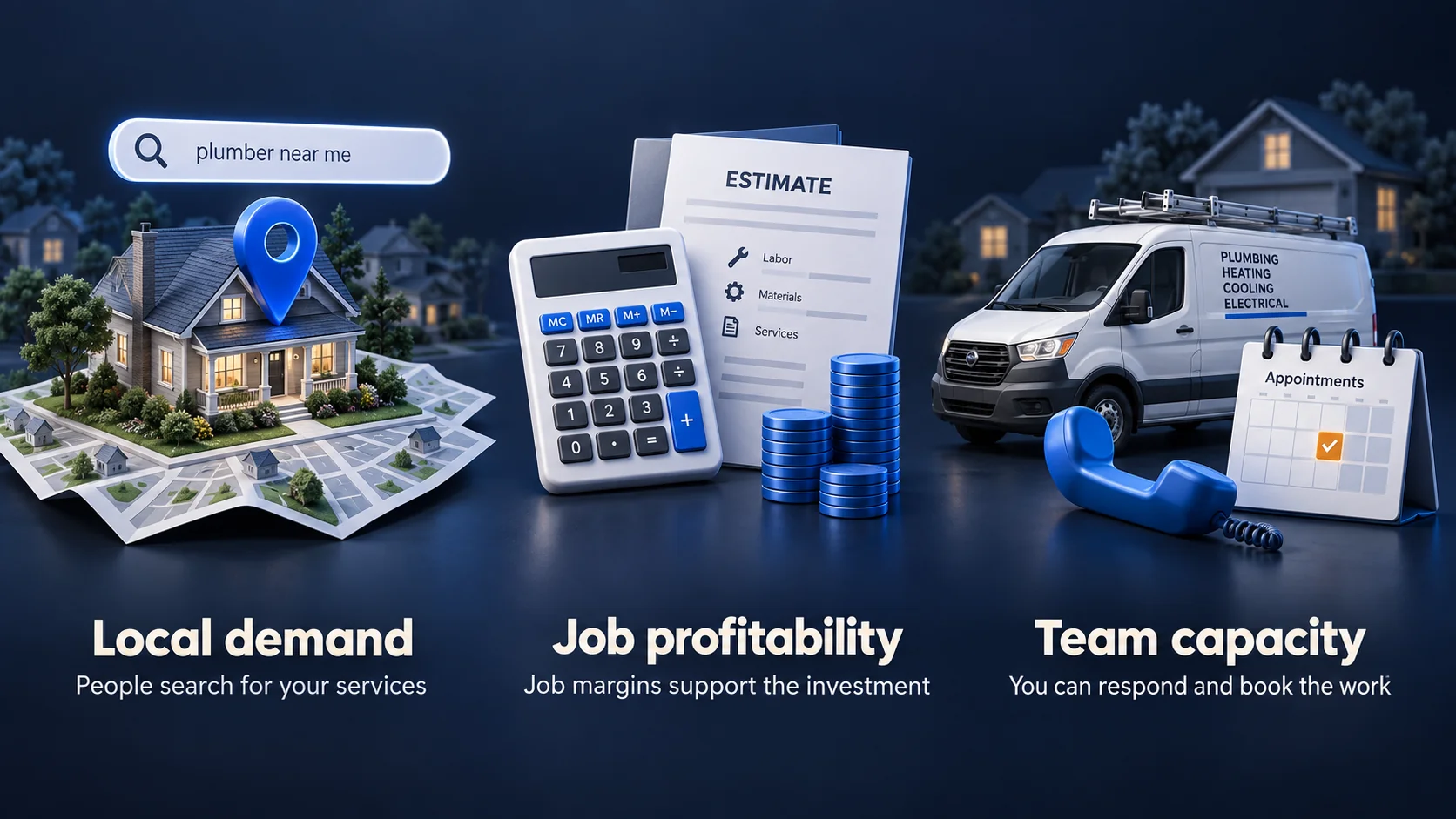
Are People Searching for the Work You Want?
Focus on the services and locations that matter to your business. A contractor looking for roof replacements needs different enquiries from one focused on emergency repairs.
Your strategy should reflect the jobs you can deliver profitably within a practical travel distance. More visibility has limited value if it attracts work outside your service area or below your minimum job size.
Can Those Jobs Cover the Investment?
Measure the value of additional booked work against the cost of your local SEO efforts. Use the amount left after direct job costs, rather than the full invoice value.
For example, suppose you invest $1,200 per month and each additional completed job contributes $600 after direct costs. Two additional jobs would cover that monthly marketing investment, before other overheads.
This is an illustrative calculation, not a pricing quote or forecast. Your own margins, booking rate, and delivery capacity determine the return.
Can Your Team Handle the Enquiries?
Search visibility creates opportunities. Your response process determines what happens next.
Before increasing lead volume, check whether someone answers calls, follows up on missed enquiries, and helps suitable customers schedule an estimate. If enquiries already go unanswered, fixing that gap may deserve attention first.
Local SEO is a stronger fit when you have:
- Specific services and locations you want to grow.
- Enough margin to support customer acquisition.
- Capacity to take on additional work.
- A reliable process for answering and following up.
- Time and budget to build the channel over several months.
For Web Pinnacles, this is why Local SEO sits at the beginning of the Booked-Job Pipeline™. Its value comes from the suitable enquiries and profitable jobs it helps generate, with every step from first contact to booking accounted for.
Web Pinnacles runs Local SEO as Stage 1 of the Booked-Job Pipeline™ for roofing, HVAC, solar, plumbing, and remodeling contractors across the USA.
Local SEO is Stage 1 of the Booked-Job Pipeline™. See how we run it in Local SEO for home service businesses. See all of our home service marketing services.